Verrucae needling and curettage for stubborn verrucae & warts on the foot
Verrucae needling and curettage are specialist treatments used for stubborn verrucae (plantar warts) on the soles of the feet. Verrucae are caused by human papillomavirus (HPV) and can be painful, persistent, and frustrating – especially when they sit on weight-bearing areas such as the heel or ball of the foot. While many verrucae resolve naturally over time, some linger for months or years, spread, or remain painful despite self-care and over-the-counter treatments. In these cases, verrucae needling and curettage can be effective options.

What is a verruca?
A verruca is a wart on the foot, usually appearing as a rough patch of thickened skin. They may show tiny black dots (small clotted blood vessels) and can feel tender when pinched from the sides or when pressure is applied during walking. Verrucae can occur alone or in clusters (“mosaic” verrucae) and may spread through direct contact or via contaminated surfaces, particularly in warm, wet environments.
When is treatment recommended?
Many people choose to treat verrucae because of pain, spreading, embarrassment, or disruption to sport and daily activity. Treatment is more commonly considered when:
- The verruca is painful on weight-bearing skin
- It has persisted despite appropriate topical treatments (e.g., salicylic acid)
- It is spreading or forming multiple lesions
- It interferes with work, exercise, or footwear
- You have an important event or performance goal and need a faster strategy
- You are immunosuppressed or have other medical factors that may influence healing
Verrucae needling: how it works
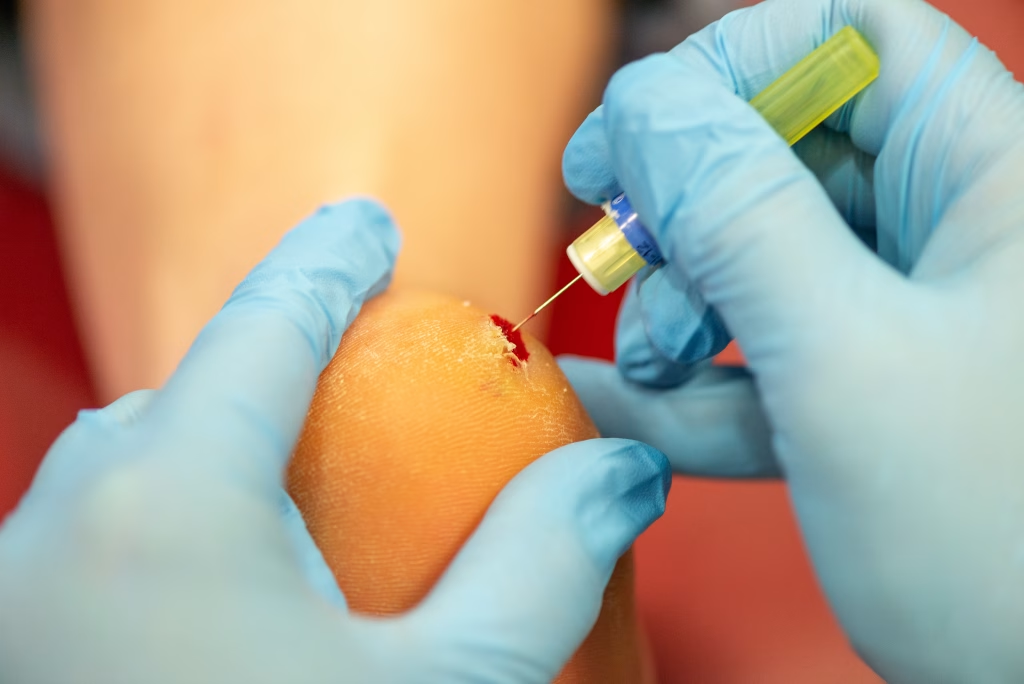
Verrucae needling is designed to trigger a stronger immune response against HPV. Under local anaesthetic, the verruca is repeatedly punctured with a fine sterile needle, pushing viral material into deeper tissue where the immune system is more likely to recognise and attack it. The aim is not just to treat the visible lesion, but to encourage an immune “wake-up” that can sometimes help clear other verrucae on the foot as well.
Needling is often considered for persistent verrucae that haven’t responded to standard treatments, or where there are multiple lesions. Because it’s done under local anaesthetic, discomfort during the procedure is usually minimal.
Verruca curettage: what it involves
Curettage (sometimes described as excision and curettage) involves carefully removing the verruca tissue after numbing the area with local anaesthetic. The clinician debrides the hard skin, then uses a curette (a small surgical instrument) to remove the wart tissue. In some cases, light cautery or chemical measures may be used to control bleeding and treat residual wart tissue, depending on clinical preference and the lesion characteristics.
Curettage can be useful when there is a single, well-defined verruca that is particularly painful or resistant to topical therapy, and when a more direct removal approach is appropriate.
Which option is best: needling or curettage?
The choice between verrucae needling and curettage depends on factors such as:
- Number of verrucae (single vs multiple/mosaic)
- Size, depth, and location (weight-bearing vs non-weight-bearing)
- Previous treatments and response
- Pain level and impact on activity
- Your medical history and healing risk
A specialist assessment helps match the procedure to the type of verruca and your goals, and also rules out other lesions that can mimic verrucae.
What to expect: procedure and recovery
Both verrucae needling and curettage are typically performed as outpatient procedures under local anaesthetic. After treatment:
- The area is dressed and protected
- You may need to reduce activity for a short period, especially if the verruca was on a weight-bearing site
- Some soreness is expected once the anaesthetic wears off
- Healing time varies depending on the size and location of the lesion
- Good aftercare is important to reduce infection risk and support skin healing
Most people can walk immediately, but you may be advised to use a protective shoe, padding, or offloading depending on your work and activity levels.
Why choose a specialist clinic?
Verrucae can be persistent and treatment choice matters. A specialist approach focuses on accurate diagnosis, selecting the right procedure, safe use of local anaesthetic, and structured aftercare—helping you get back to comfortable walking as quickly as possible.
If you’re dealing with a painful, long-standing verruca, I can assess the lesion, discuss all appropriate options, and advise whether verrucae needling or curettage is the best next step.
Risks and considerations
As with any minor procedure, there are potential risks. These may include:
- Post-procedure pain or swelling
- Bleeding (especially with curettage)
- Infection (rare with proper aftercare)
- Delayed healing on weight-bearing skin
- Scar tenderness or sensitivity
- Recurrence (verrucae can return, particularly if immune response is limited)
I will discuss suitability, expected outcomes, and aftercare tailored to your foot and lifestyle. For example, curettage may not be the best option for very large or multiple mosaics verrucae.